Mighty Woman of Valor — Rise Up
Do not forget who you are. And whose you are.
There is a mandate on the lives of those who believe in God.
Do not forget who you are. And whose you are.
It sounds simple. But in the routine of life, in the ordinary, and in the chaos of a world that does not slow down, it is surprisingly easy to lose sight of this truth.
Yet even when we struggle to hold on to this truth… God is still working.
God often takes what appears unremarkable, hidden, or even broken, and turns it into something that carries His glory.
One of the clearest examples of this in Scripture is Gideon.
Gideon: the call of the unlikely
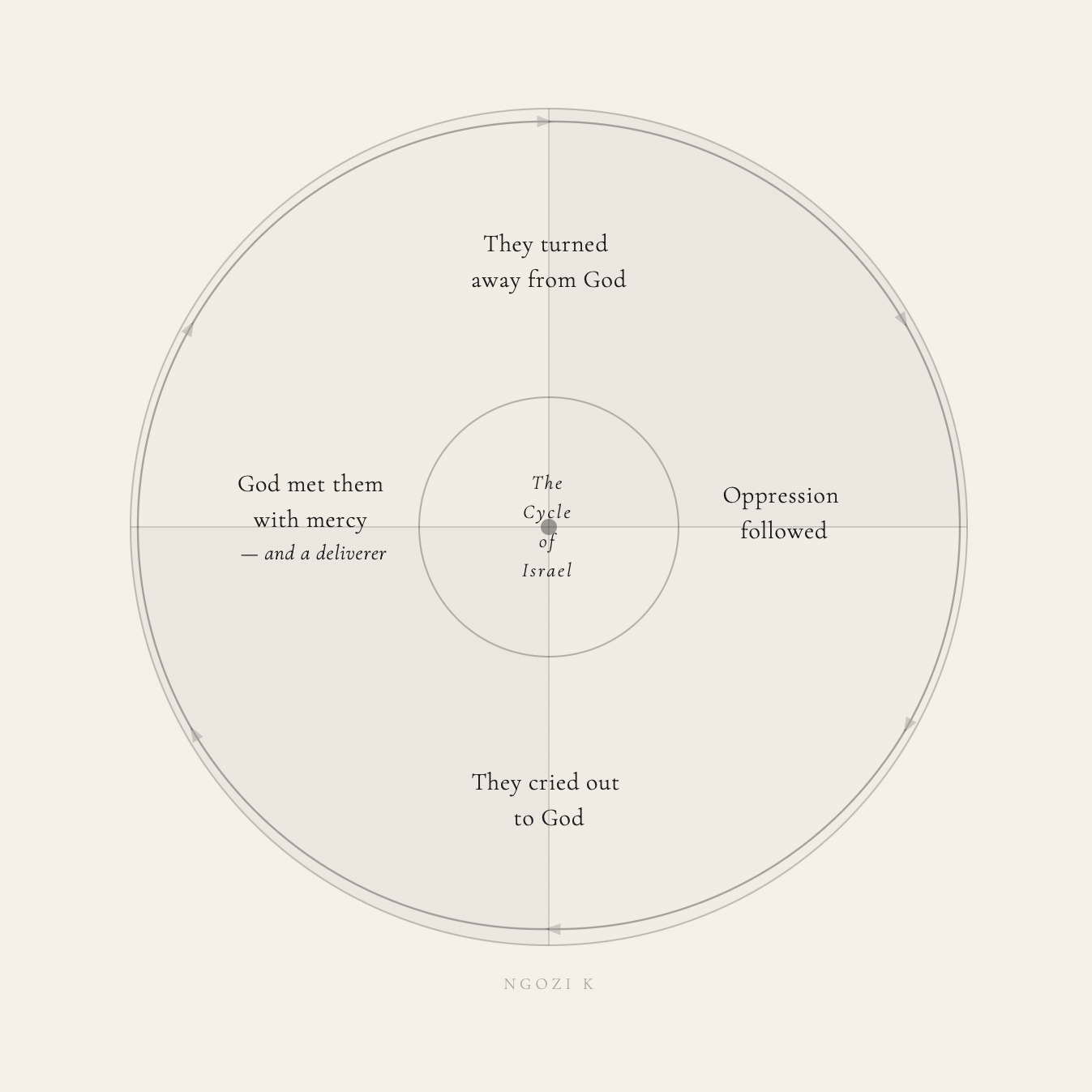
Gideon’s story unfolds during a period when Israel was caught in a vicious cycle. They would turn away from God, then face oppression, cry out, and God would meet them with mercy in the form of a deliverer.
Then the cycle repeated.
Over and over again.
Gideon appears at one of these moments.
Israel is under the oppression of the Midianites. Gideon is from the tribe of Manasseh, and that detail matters more than it first seems.
Manasseh’s name traces back to Joseph in the book of Genesis. When Joseph named his firstborn, he said: “God has made me forget all my trouble and all my father’s household.” (Genesis 41:51)
So, the name Manasseh carries within it the sense of God causing one to forget trouble.
Yet when we first encounter Gideon, he is not forgetting anything. He is hiding in a winepress, threshing wheat in secret, afraid.
It is there — in that hidden, and fearful place — that the Angel of the Lord appears and says:
“The Lord is with you, you mighty man of valor.” (Judges 6:12)
Gideon’s response is telling.
He does not receive the word easily. He points to his weakness. His clan is the least in Manasseh, he is the smallest in his father’s house.
But God does not retract the call.
And later, in Judges 7 and 8, He reduces Gideon’s army from 32,000 men to 300, making it unmistakably clear that the victory would belong to God, not to human strength or numbers.
Gideon’s story calls us to remember the mandate on our lives.
It is a reminder that God frequently calls people who do not look the part. When we surrender our weakness to God, He uses it as a platform to work through.
Which brings us to the heart of it.

Source: Pinterest
Release the past
God can use your past. He often does. But He does not want you living in it.
There is a distinction I have been sitting with: the difference between reflection and residence.
Reflection can teach you. Residence will keep you stuck.
You can honour what has been without making a home there.
Jesus says plainly in Luke 9: “No one, having put his hand to the plough, and looking back, is fit for the kingdom of God.” (Luke 9:62)
This is not Jesus being unmoved by the weight of what you have carried. It is about the cost of following Him into what is ahead. You cannot move forward whilst looking backward. Not truly.
Dwelling on the past bears no fruit, and everything in God bears the mark of fruitfulness. “The one who remains in Me and I in him bears much fruit.” (John 15:5)
Joseph understood this. Sold into slavery by his own brothers, falsely accused, imprisoned — and yet God was still working. What was meant for his destruction became the very path to purpose. “You meant evil against me; but God meant it for good.” (Genesis 50:20)
Your past is not meant to keep you in chains. It is preparation. And Paul says it plainly: “Forgetting those things which are behind and reaching forward to those things which are ahead, I press toward the goal.” (Philippians 3:13–14)
Do not let what was steal from what can still be.
Yesterday is gone, and God has already gone before you.
Release the constant need to understand
A few months ago, I was in a season of real wrestling with God.
I had obeyed. I had waited. I had trusted. Yet the clarity I was looking for simply was not coming. I did not understand what God was doing, and that lack of understanding drove me into a quiet, persistent frustration.
Not frustration at God. But the kind of frustration that comes when you know He is present, and you still cannot see what He is building.
What He showed me in that season was this: it is all right to wrestle.
Wrestling with God is not the absence of faith. In many ways, it is the expression of it. Jacob wrestled. Job wrestled. Jesus Himself wrestled in Gethsemane. God is not threatened by your questions. He invites you to bring them — “boldly to the throne of grace.” (Hebrews 4:16)
Here is another truth:
Wisdom is not the same as complete understanding.
There are some things we will not fully understand in this realm. Scripture makes that clear.
“For we know in part and we prophesy in part.”
(1 Corinthians 13:9)
Wisdom in the wrestle means trusting God anyway.
“Trust in the Lord with all your heart, and lean not on your own understanding.”
(Proverbs 3:5–6)
Perhaps that is part of the design. Not knowing everything keeps us close to the One who does.
Release the performance
When I say performance, I do not mean discipline or ambition or healthy effort. I mean the roles we take on to feel acceptable. The identities we rehearse because they feel safe. The versions of ourselves we present because we believe they make us worthy of love, of opportunity, of being chosen.
Gideon had been performing smallness for so long it had become his identity.
He had rehearsed being the weakest, the least, the hidden one. It was so familiar that even when God appeared and called him something different, his first instinct was to argue with the name he had been given.
What are you performing that God is asking you to put down?
Our intimacy with God is not won by performance. It cannot be. Jesus has already done the finished work.
Human sight says:
I am not enough.
Not qualified enough, not connected enough, not ready enough.
But since when has God been limited by human assessment?
He used Moses who could not speak with confidence. He revealed Himself to the woman at the well across every social barrier of her time. He saved Daniel from the mouths of hungry lions.
“God has chosen the foolish things of the world to put to shame the wise.” (1 Corinthians 1:27)
If you belong to His Kingdom, you cannot keep measuring yourself by the world’s standards.
Remember this: whilst God does not want performance, He does invite separation.
Throughout Genesis 1, separation is how God establishes order — light from darkness, waters from land. Sometimes what feels like being set apart is simply God drawing you closer to Himself for a particular purpose, and bringing order to your life.
If you have been wondering why your story looks different from everyone else’s, that may be part of the answer.
Release the lackluster spirit — and receive the spirit of excellence
A mighty woman of valor cannot afford a lackluster spirit.
To be lackluster is to lack sharpness, intention, and radiance. None of those things reflect the nature of God. And we are called to reflect Him.
“Do you see a man who excels in his work? He will stand before kings.” (Proverbs 22:29)
Excellence does not begin when you have everything in place. It begins now, in the small things, in the habits you are forming in this season.
Gideon did not have much. He needed reassurance and confirmation before he could move. But he moved. It was in that willingness and his obedience in the little that excellence began to show her face.
What you are building in the quiet and the small is preparing you for what is coming.
You do not suddenly know how to carry greater things when they arrive. You are trained in the lesser places first.
So ask God to release His spirit of excellence onto you. Then be prepared to receive it, and walk in it — remembering that the labour of stewardship is yours.
Receive the ability to be still — but only for a season
Finally, there is something else a mighty woman of valor must receive.
The ability to be quiet and to sit with God — but only for a season.
There is a kind of formation that happens only in stillness. In the place where it is just you and God.
I believe there is particular value in this for women. In taking intentional moments away. Not to escape life, but to be recalibrated. To bring your questions, your weariness and your unresolved things to Him. To let Him meet you there — because He will.
If you are in the valley, He will meet you there.
If you are confused, He will meet you there.
If you have lost hold of who you are and why you are here, He will meet you there too.
In that place, He restores. He reminds. He reorients. He strengthens the inner life, which is the life everything else grows from.
Quietness is not the end. It is preparation.
And for the woman God is calling forward, preparation matters more than it might appear.
Go and be with Him. Let Him remind you of who you are.
Then rise as a mighty woman of valor.